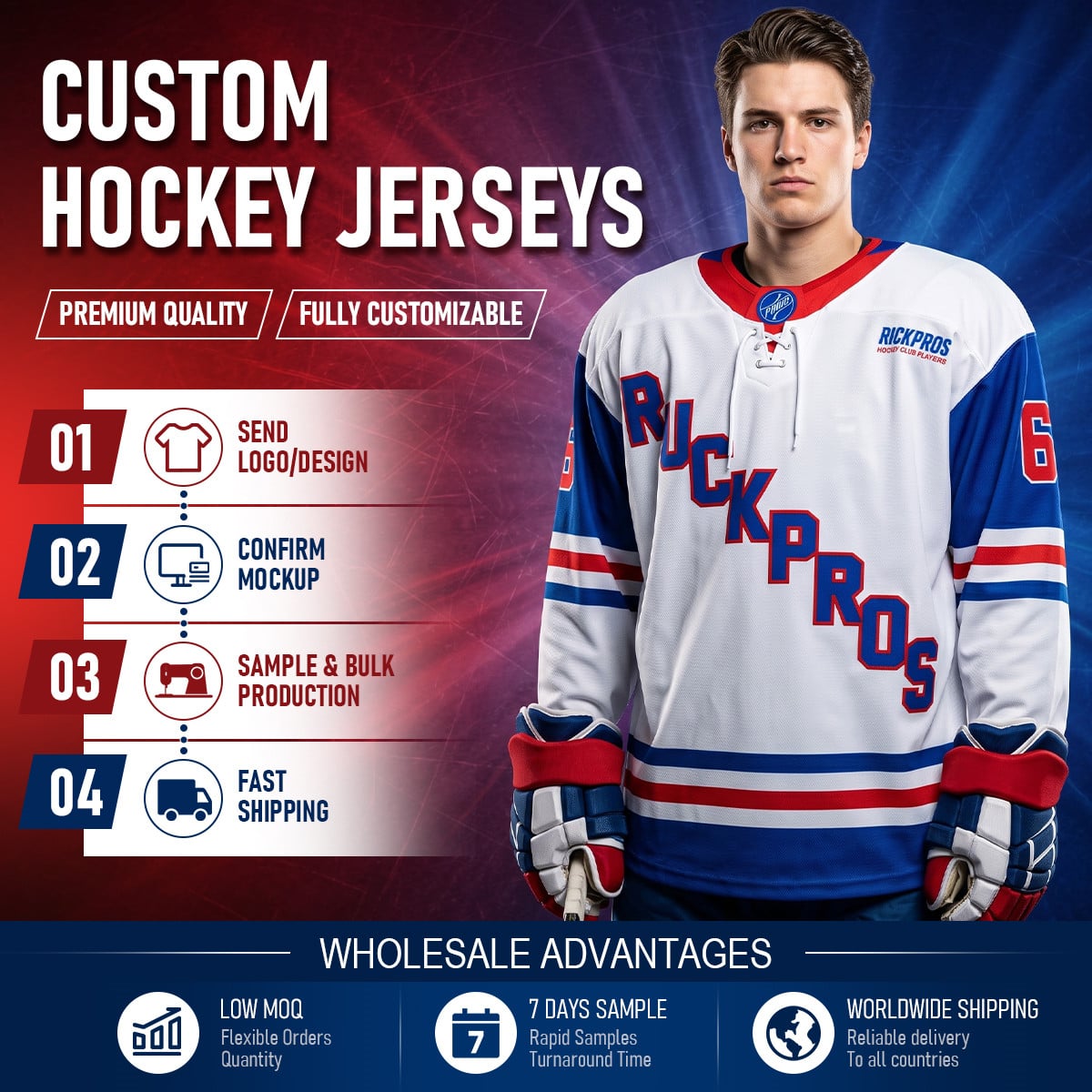
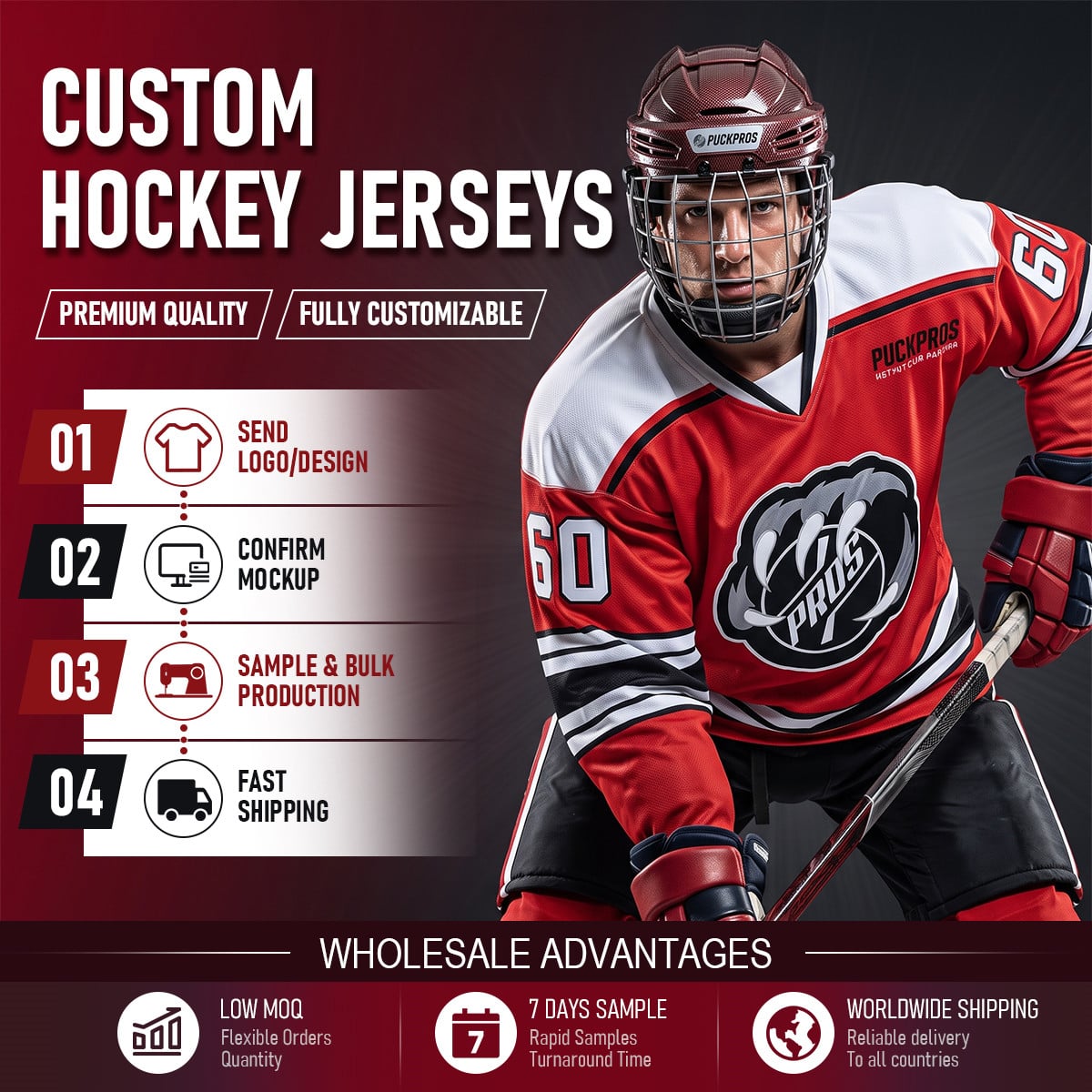
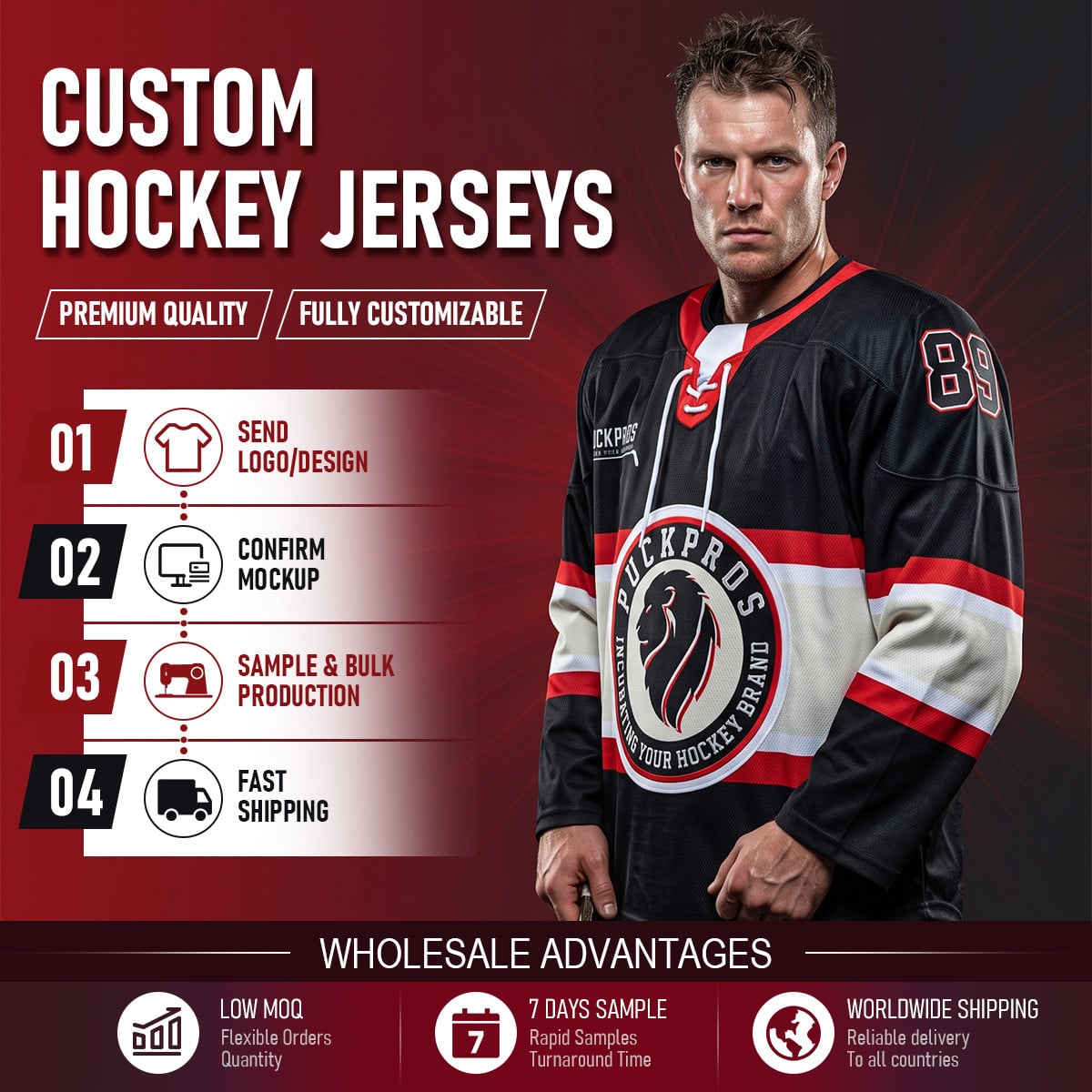
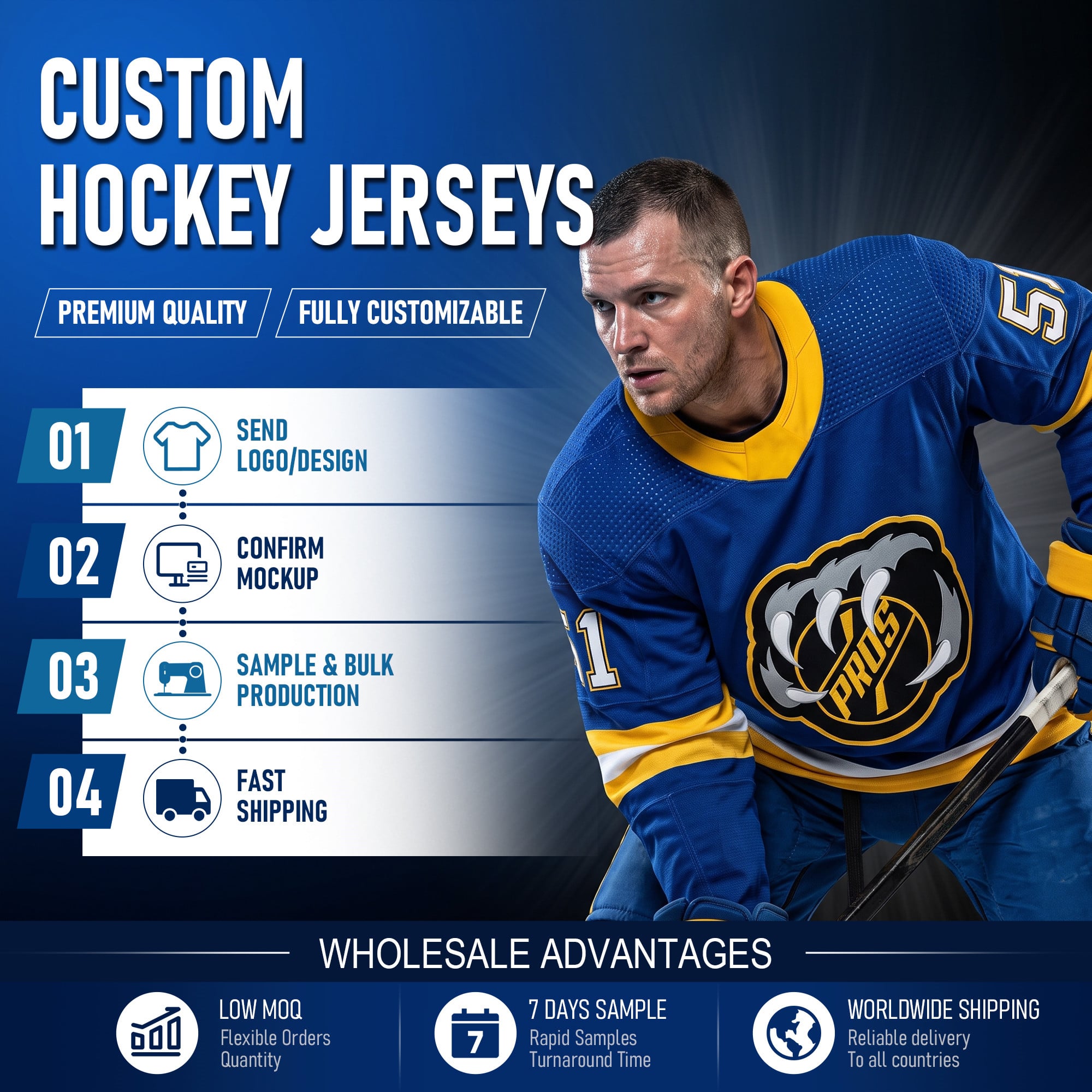
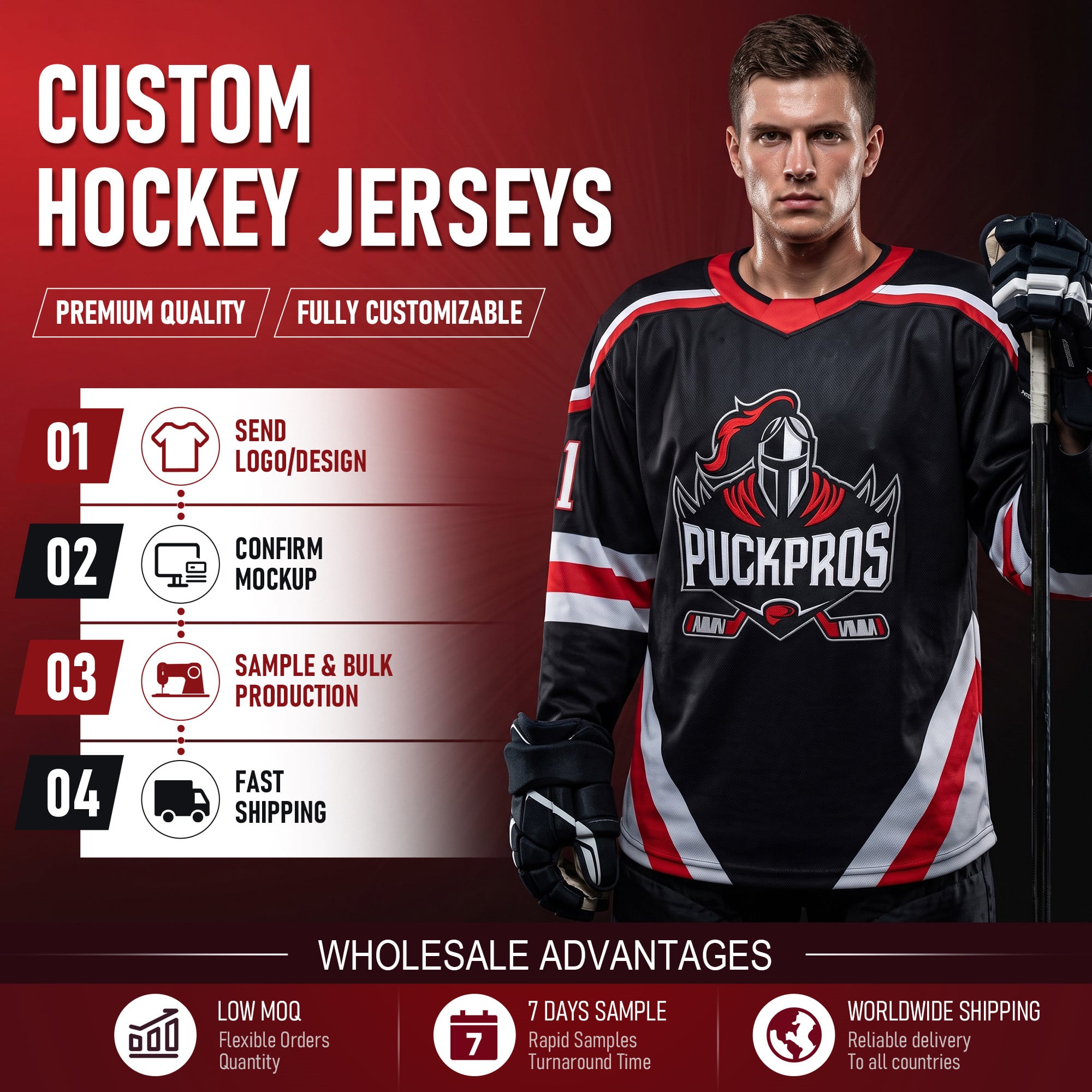
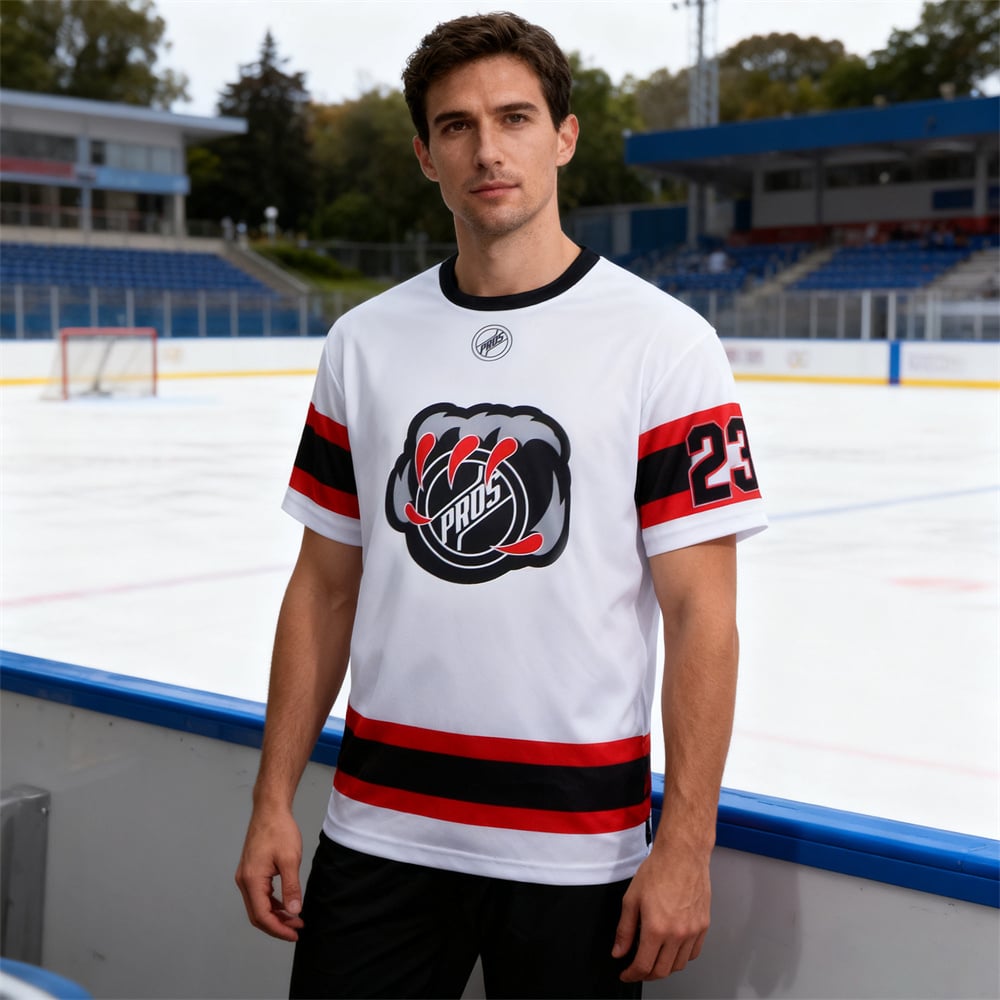
Every custom hockey jersey tells two stories. One is told on the ice — the shifts, the saves, the goals. The other happens long before puck drop, inside a factory where a roll of polyester fabric, a digital design file and the steady hands of skilled craftsmen become the armor a team wears into battle. At PUCKPROS, that second story is written every single day. Here is how a custom hockey jersey is born, stage by stage.
Every jersey starts with an idea: a logo, a color scheme, a number, a pattern that belongs to your team. Our in-house design team of eight experienced designers turns that idea into a digital mockup — often within 24 hours, at no cost. We work directly from your logo file, artwork or even a hand-drawn sketch, and we match colors against the Pantone system so what you see on screen is what your team will wear. Design isn't a hurdle; it's the first step of the journey.
Not all jerseys are created equal, and neither are their fabrics. Game jerseys are typically built from 100% polyester or high-performance polyester blends — materials chosen for strength, abrasion resistance and moisture-wicking behavior. Polyester stands up to the friction of the boards, the collision of bodies and the scrape of skate blades. Nylon brings elasticity for explosive sprints. Spandex lets the fabric stretch with the body through sharp turns and hard stops. Before a single meter is cut, our quality team checks fabric weight, yarn count, colorfastness and breathability with trusted global suppliers, so the base is right before production begins.
Our fabric systems go a step further. Vortex-Mesh 3D construction delivers up to 33.5% better breathability than conventional sportswear, so sweat is wicked away fast during sprints and collisions instead of chilling against the skin. Armor-Pit laminated panels add 46.8% greater tear resistance while keeping the jersey sleek — a combination that keeps its premium look through repeated machine washing.
This is the stage where white fabric becomes your team's visual identity. Our six high-precision digital printing machines output full sublimation patterns — the technique that makes hockey jerseys famous for bold, edge-to-edge graphics. The design is printed onto transfer paper with specialized inks, then transferred onto the polyester fabric under heat and pressure. At around 175–205°C, the dye turns from solid to gas and bonds directly into the fibers. The color becomes part of the jersey itself — no raised print, no added weight, nothing to crack, peel or fade, wash after wash.
Sublimation isn't just vivid — it's performance-friendly. Because the color lives inside the fibers, the fabric keeps its structure: no stiff ink layer, no blocked airflow, no added weight. Players get edge-to-edge team identity and the breathability the game demands.
Once the panels carry their printed color, they move to the cutting room — where precision matters most. Our workshop is equipped with nine CNC laser cutting machines that cut panels with a precision of ±2 mm. Laser cutting isn't just fast; it's consistent. Mirror-image panels are cut in matched pairs so the left and right sides of the jersey are perfectly symmetrical. Complex shapes like collars and cuffs, which are difficult to repeat exactly by hand, are handled cleanly — and precise nesting means less fabric waste.
From the cut, panels move to sorting. Every piece is gathered per player and per size, so the sleeve cut for number 21 never travels to the body cut for number 17. Sorting looks like housekeeping and behaves like quality control: it is the step that keeps a bulk run from becoming a matching exercise.
Some details deserve more than print. Team crests, logo patches and twill emblems get the embroidery treatment on our 11 multifunctional embroidery machines. Embroidery adds a premium, dimensional texture that catches the light and signals quality — and it's incredibly durable, standing up to seasons of games and laundries. For teams that want a classic, professional look, embroidery is the difference between a jersey and a legacy piece.
One element of the jersey is still applied with heat, and only one: the back neck label. With the crest stitched and the panels still flat, the label carrying brand, size and care content is pressed onto the collar piece and its carrier film peeled away, leaving a soft, edge-free mark. Nothing else on the jersey is pressed. The body, the stripes, the player name and the numbers were settled in the fabric two stages earlier, at the transfer calender.
Now the panels come together. Our production floor runs 73 professional sewing machines, including twin-needle stitching for strength. Shoulder and elbow areas — the zones that take the most punishment in hockey — receive reinforced stitching. Seams follow ergonomic 3D patterns so the jersey moves with the player: stretch panels under the arms, articulated elbows, a collar that doesn't choke, cuffs that don't bind. Smart sewing machines with automatic thread trimming and real-time quality monitoring keep every stitch consistent, jersey after jersey.
The result is a jersey that moves like it was made for the player — because it was. Every collar, cuff and hem is balanced for comfort and mobility, so nothing binds, rides up or gets in the way of a one-timer.
No jersey leaves our factory without earning it. Five dedicated QA/QC inspectors oversee three layers of checks: material testing before production, in-process inspection at every stage, and final testing that simulates real on-ice conditions. Jerseys are friction-tested, tear-tested and colorfastness-tested, then put through industrial washing cycles again and again. Only products that pass every test carry the PUCKPROS label.
A finished jersey is inspected, folded and packed with care. Our lead times respect your schedule: samples in 3–5 days, bulk production in 7–15 days, depending on quantity and craftsmanship. Then your order travels by commercial express (3–7 days), air freight (15 days), sea freight (30 days) or rail (25 days) — whichever fits your timeline and budget.
Everything about your jersey can be yours: team logos, player names and numbers, multiple font and color options, custom collars, cuffs and color combinations. Sizes range from youth to big and tall, and our flexible MOQ means even a single piece is possible — perfect for samples, small clubs or full league orders. We also store your team's designs digitally, so reordering next season is a one-message process.
The next time your team steps onto the ice in custom PUCKPROS gear, you'll know the journey behind it: a design born in 24 hours, fabric tested before it's cut, laser-precise panels, colors bonded into the fibers, seams reinforced for battle, and quality checked like it's game day. From fiber to fight — that's how a PUCKPROS jersey is made. Ready to start your team's story? Send us your design today.
 Hot News
2026-11-18
2026-11-23
2026-11-21
2026-11-16
2026-11-13
2026-11-11

PUCKPROS is a designer & manufacturer specializing in team hockey jerseys for 12 years. We have provided customized services for over 1,500 hockey teams.
Mars Space 206, No. 366 Heng'an Road, Hongshan District, Wuhan City, Hubei Province, China
Copyright © Wuhan Puckpros Sporting Goods Co.,Ltd All Rights Reserved - Privacy Policy - Blog
 EN